Global Health; a reflection
- bgiles2016
- Jan 6, 2022
- 3 min read
Hey friends <3 I'm back in Israel, just starting the second semester! This is a generic post about global health that I wrote for the MSIH public blog. You can expect a much more personal post coming soon!

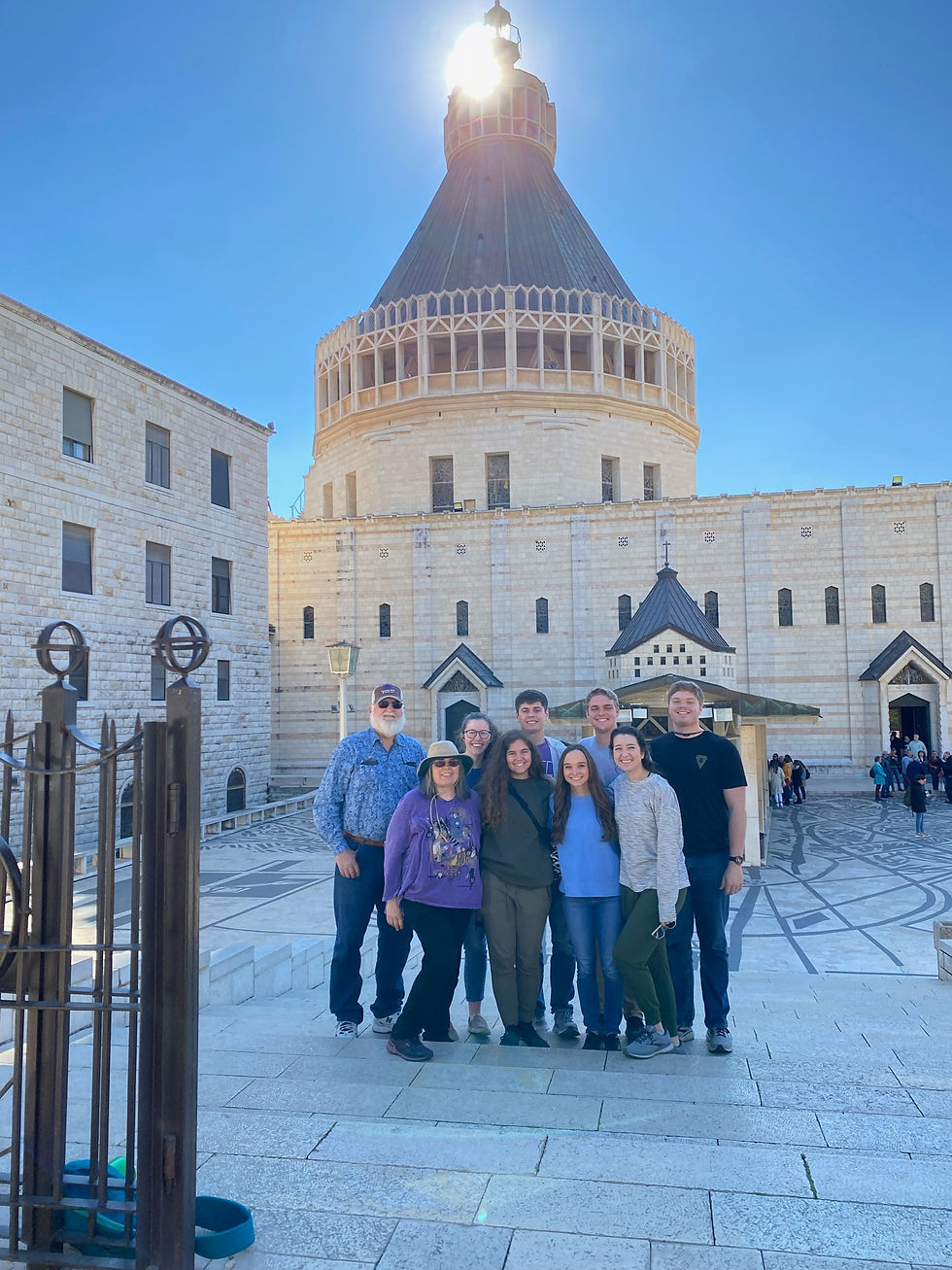
A photo of my schoolmates; I didn't take this photo.
In the face of Covid-19, it is evident that health is a global issue affecting all of us. One of my favorite parts of MSIH’s curriculum this semester has been the Global Health courses and emphasis. Don’t get me wrong, we have just begun to touch the surface, and there are numerous discussions I am excited to be a part of as I continue my education at MSIH. I know I will continue to learn what it means to practice health with a global perspective for the rest of my life, but I’m getting the incredible exposure right now.
If you look up the definition of Global Health, Wikipedia provides the definition below.
“Global health is the health of the populations in the worldwide context; it has been defined as ‘the area of study, research and practice that places a priority on improving health and achieving equity in health for all people worldwide’”.
It’s a nice comprehensive definition, but what does it mean? How do we place health in a worldwide context? What does it look like in practice to achieve health equity? Why is it important to learn about global health? The answers to these questions aren’t at all straightforward and can become quite complex in terms of practicality. There are some questions that simply don’t have answers.
I don’t think global health can be understood from a string of words and high aspirations. Global health is through lived experiences. Hard conversations. Lots of listening and reading. A willingness to learn isn’t enough, it requires a desire to learn. One our instructors commented that if you don’t look for health inequities, you won’t see them. It’s not because inequities aren’t present. But when they don’t affect you personally, they are easier to avoid. Ignorance may be bliss but only temporarily. A tumor will continue to grow whether or not you acknowledge its existence.
In our Introduction to Global Health course, we have had the opportunity to talk about Tuberculosis, AIDS, health care in crisis zones, epidemics and pandemics (including COVID of course), and more. These are BIG, complex topics. Each student also presents about a specific global health topic. Digging into research papers on the health crisis in Afghanistan gave me a deeper perspective on the complexity of health problems. They involve politics, economics, geographics, and much more. As is the case with many global health concerns, there is no easy answer to the health crisis in Afghanistan. But if we don’t ask what can be done, health in our communities and around the world may never improve. I appreciated my classmates’ presentations and the thought-provoking conversations they have sparked.
I think there is a part of each of us that wants to be the hero, change the world, swoop in, and fix all the problems. To effectively work in global health, we each need to reconcile within ourselves that we aren’t the hero. We can’t save the world. This doesn’t mean we shouldn’t want to help or do things that will make a difference. It just means it’s not about us. We need to ask if our help is wanted and what kind of help is desired before jumping in with our ideas of solutions.
Health goes beyond national borders. Global health issues are health problems ‘there’ but also here in your backyard, wherever you are. The global health curriculum has been one of my favorite parts of MSIH so far. I am excited to continue having deep discussion about hard topics that will help transform me into the best physician I can be.


Comments